
Heading out on a safari? I know how tricky packing can be when you’re limited on space and facing unpredictable weather.
What to pack for African safari trips can make or break your experience, and I’ve been there myself. You need the right clothes, gear, and essentials without overpacking for those tiny bush planes.
In this guide, I’ll walk you through everything you need: clothing that works, must-have gear, self-care items, and smart packing tips.
Trust me, getting this right means more comfort, better photos, and zero stress when you’re watching lions at sunrise.
Why Packing Right Matters
Getting your packing right for a safari isn’t just about convenience. It’s about your comfort and safety in conditions that can shift quickly.
One morning you’re shivering at dawn, and by noon you’re sweating in the heat.
Space is limited on safari. Bush planes have strict weight limits. You can’t bring your entire closet. Smart packing means choosing items that serve multiple purposes.
Many people make the same mistakes. They pack too much. They bring the wrong colors. They forget about dust and sun protection. These small errors can make your trip less enjoyable.
The good news? With the right approach, you can pack light and still have everything you need.
Safari Clothing Essentials

The right clothes keep you comfortable from sunrise game drives to evening camp fires.
Neutral & Practical Colors
Your clothing colors matter more than you might think. Stick to khaki, beige, olive, or earthy tones. These colors help you blend into the environment. Animals are less likely to notice you, and you’ll get better wildlife viewing.
Skip the bright colors. Leave your neon shirts at home. Avoid black and dark blue too, as they attract tsetse flies. Don’t pack camouflage patterns either. Some countries actually ban them for civilians.
Layering for Comfort
Safaris mean temperature swings. Early morning game drives can be cold. Midday gets hot. Evenings cool down again. Layering solves this problem.
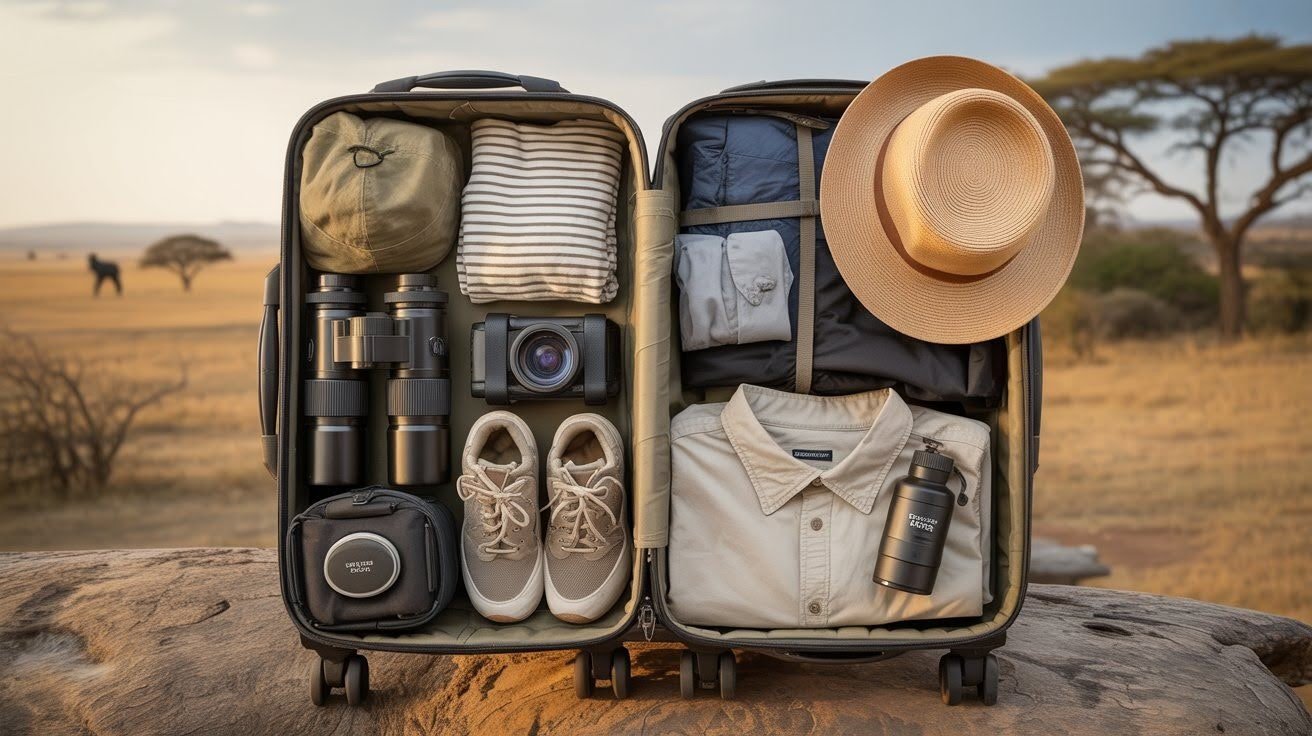
Start with base layers like tank tops or short-sleeved shirts. Add mid-layers such as lightweight, long-sleeved shirts for sun protection. Finish with outer layers including a fleece and lightweight puffer jacket for chilly mornings.
This system lets you adjust throughout the day. You can strip down when it warms up and bundle up when needed.
Clothing Items to Pack
Here’s what should go in your bag:
- Lightweight pants or zip-off trousers work best. They protect your legs from sun and bugs while keeping you cool. Zip-off options give you flexibility.
- Shorts for daytime if you prefer, but pants are safer for game drives.
- A linen shirt or wrinkle-free dress for evening meals at the lodge.
- A buff or scarf protects you from dust and sun. You’ll use this more than you expect.
- Sports bras, underwear, and socks based on how often you can do laundry. Most lodges offer laundry services.
Footwear & Accessories
Good shoes make a difference. Pack hiking shoes or sturdy walking shoes for game drives and bush walks. Closed-toe shoes or sneakers work for general wear around the lodge.
Flip-flops are great for relaxing at the lodge or by the pool.
Don’t forget a wide-brimmed hat for sun protection. Polarized sunglasses cut glare and help you spot wildlife better.
Seasonal Considerations
Dry or summer season: Bring a lightweight rain jacket just in case. Pack breathable sleepwear. Throw in a swimsuit if your lodge has a pool.
Wet or winter season: Add scarves, gloves, and a beanie for cold mornings. Moisture-wicking socks keep your feet comfortable in damp conditions.
Safari Gear Essentials

Beyond clothing, these tools and accessories make your safari smoother and more enjoyable.
Photography & Tech
Your camera setup can make or break your safari memories. Bring a camera with a good zoom lens or a smartphone with telephoto capabilities. Wildlife keeps its distance, so zoom matters.
Pack extra batteries and memory cards. You’ll take more photos than you think. A rain cover protects your gear during unexpected showers.
Binoculars are essential for spotting distant animals. Even the best camera can’t replace the experience of scanning the horizon yourself.
Bring quality sunglasses and a small day pack for organizing your gear during drives.
Travel Gear
Soft-sided luggage is required for bush planes. Hard-shell suitcases don’t fit in small aircraft holds. Choose duffel bags or soft backpacks.
Packing cubes keep everything organized. They compress clothes and make finding items easy when living out of a bag.
A universal travel adapter ensures you can charge all your devices. Lodges have different outlet types.
Self-Care & Health Essentials

Taking care of yourself in the African bush requires some preparation.
The African sun is intense. Pack high-SPF sunscreen and apply it regularly. Don’t forget lip balm with SPF protection.
Insect repellent with DEET at 30% or less keeps mosquitoes away. Higher concentrations can damage camera equipment and synthetic fabrics.
Bring all prescription medications in original containers. Add a small medical kit with basics like pain relievers, antihistamines, and bandages.
An eye mask and ear plugs help you sleep better. Safari camps can be noisy with wildlife sounds at night.
Hand sanitizer and wet wipes are lifesavers when clean water isn’t available. You’ll use these daily.
Tips for Packing Light & Smart
Smart packing means bringing less but choosing better. Here’s how to do it right.
- Prioritize carry-on luggage whenever possible. This keeps you mobile and avoids lost baggage headaches.
- Use lodge laundry services to cut down on clothing. Most places offer same-day or next-day service. You can pack fewer items and rewear favorites.
- Wear your heaviest items on the plane. Put on your hiking shoes and jacket. This saves luggage weight and space.
- Leave room in your bag for souvenirs. You’ll want to bring home handcrafted items and local art.
Expert Safari Travel Tips
A travel advisor can handle logistics and often secure perks you wouldn’t get booking alone. They know which camps and guides deliver the best experiences.
- Always wear neutral colors to blend with your surroundings. This improves wildlife viewing and keeps you comfortable.
- Bring a small daypack for game drives. Keep your camera, water, sunscreen, and binoculars within easy reach.
- Ensure your insurance covers international travel and medical evacuation. Safari destinations are remote. Also, research tipping etiquette for your specific country. Guides and staff rely on tips.
Conclusion
Packing for safari doesn’t have to be stressful. Focus on comfort, safety, and practical choices. I learned this the hard way on my first trip when I brought way too much stuff.
Keep your colors neutral, layer your clothes, and pack only what you’ll actually use. The unpredictable moments make safaris special, the surprise elephant crossing, the leopard in a tree, the sunset you didn’t expect.
Get your packing right, and you’ll be ready for it all. Double-check your list before you leave, and then just enjoy the experience.
Frequently Asked Questions
Can I wear black clothing on safari?
No, avoid black clothing. Black and dark blue attract tsetse flies that bite. Stick to neutral earth tones like khaki, beige, and olive for better wildlife viewing.
How much luggage can I bring on a bush plane?
Bush planes limit luggage to 15-20 kg per person in soft-sided bags. Hard suitcases don’t fit. Use duffel bags or soft backpacks that compress easily.
Do I need special shoes for walking safaris?
Yes, wear sturdy hiking shoes with ankle support. Closed-toe shoes protect your feet from thorns, rocks, and insects. Break them in before your trip.
Should I pack formal clothes for safari lodges?
No, formal wear isn’t necessary. Most camps are casual. Bring one nice linen shirt or wrinkle-free dress for evenings, but leave heels at home.
What’s the best bag for daily game drives?
A small daypack or crossbody bag works best. Keep it light with your camera, binoculars, sunscreen, and water. Choose neutral colors and soft materials.
