
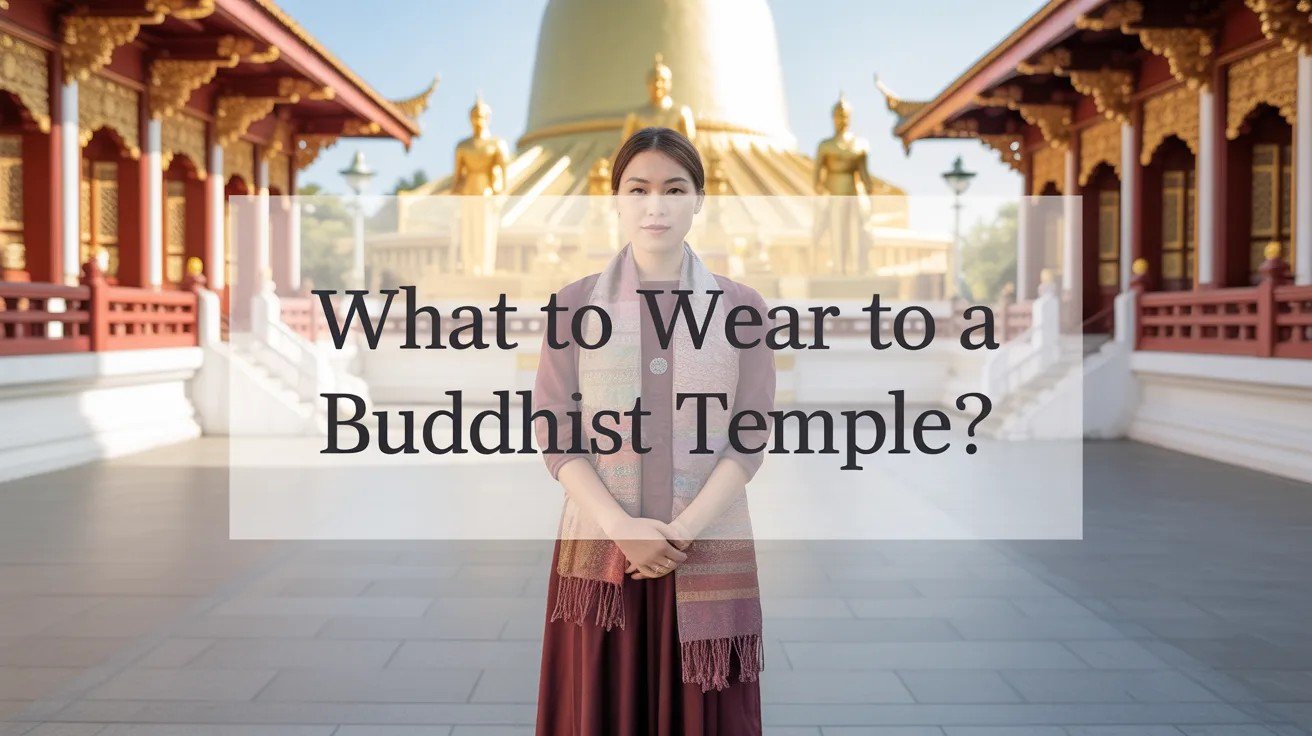
Planning a temple visit but not sure about the dress code? I’ve been there.
What to wear to a Buddhist temple matters because these are sacred spaces that deserve respect. I made mistakes on my first temple visits, and I want to help you avoid the same embarrassment.
In this guide, I’ll show you exactly what clothes work and what doesn’t.
You’ll learn the basic coverage rules, why temples have dress codes, and what to do if you show up unprepared. I’ll also cover practical tips for hot weather and cultural rules beyond clothing.
By the end, you’ll know how to dress right for any Buddhist temple visit.
Understanding Buddhist Temple Dress Codes
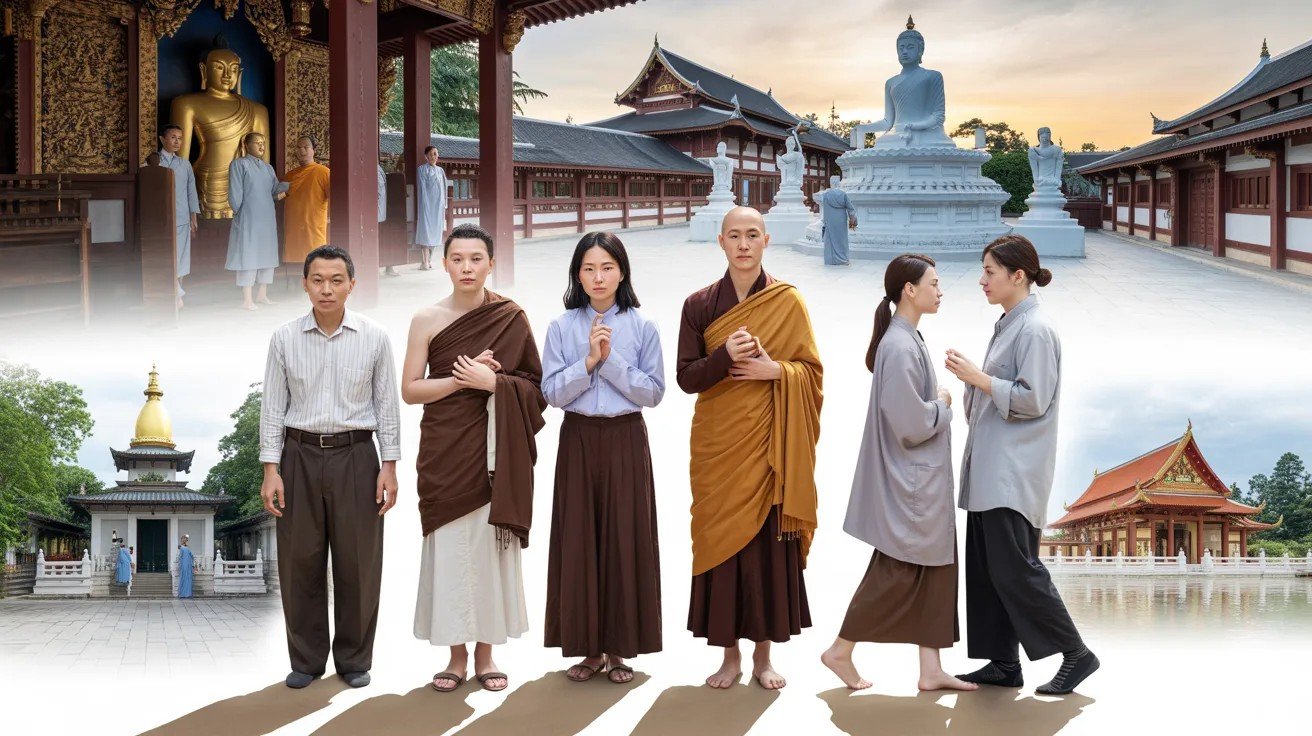
Buddhist temples welcome visitors from all backgrounds, but they expect everyone to dress modestly.
The basic rule is simple: cover your shoulders and knees. These aren’t arbitrary rules. They reflect Buddhist values of humility and respect for sacred spaces.
Different temples enforce dress codes with varying strictness. Major tourist sites tend to be more rigorous than small local temples.
Hot weather doesn’t change the requirements. Most temples provide or rent cover-up clothing if you arrive unprepared.
Why Dress Code Matters at Buddhist Temples
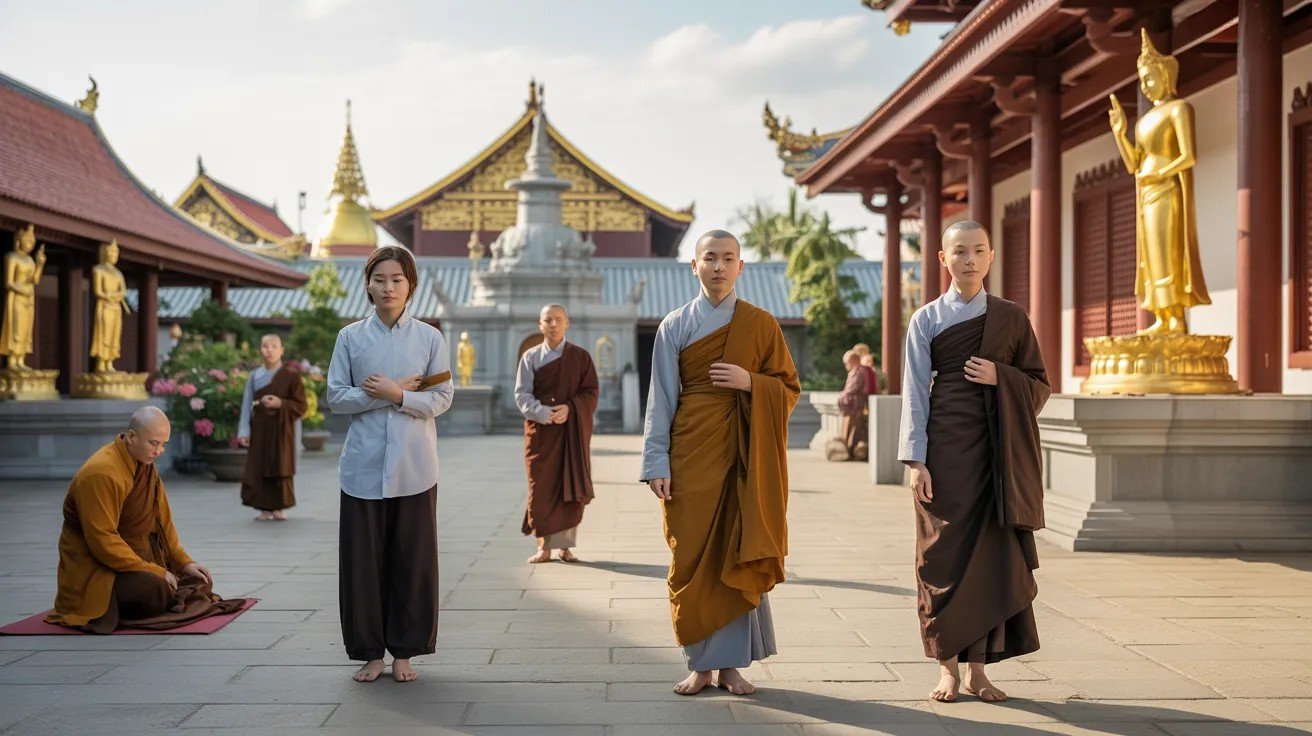
Dress codes at temples show respect for sacred Buddhist spaces and honor local religious customs across different countries.
Respect for Sacred Spaces
Buddhist temples aren’t tourist attractions. They’re active places of worship where monks pray and meditate daily. When you dress modestly, you’re showing that you understand this space is holy.
Think of it like visiting someone’s home. You wouldn’t wear a swimsuit to dinner at a friend’s house, right? The same logic applies here.
Cultural and Religious Expectations
Buddhism teaches mindfulness and humility. These values extend to how visitors present themselves. In many Asian cultures, showing too much skin is considered disrespectful, especially in religious settings. What seems normal back home might offend local worshippers.
I learned this firsthand when I saw tourists turned away at a Bangkok temple. They didn’t mean harm, but their shorts and tank tops didn’t meet the standards.
Differences Between Countries and Temple Types
Not all temples enforce rules the same way. Thai temples tend to be stricter than Japanese ones. Major tourist temples like Wat Phra Kaew have guards checking everyone at the entrance.
Smaller neighborhood temples might be more relaxed. Research your specific destination before you go.
Essential Clothing Rules for Visitors
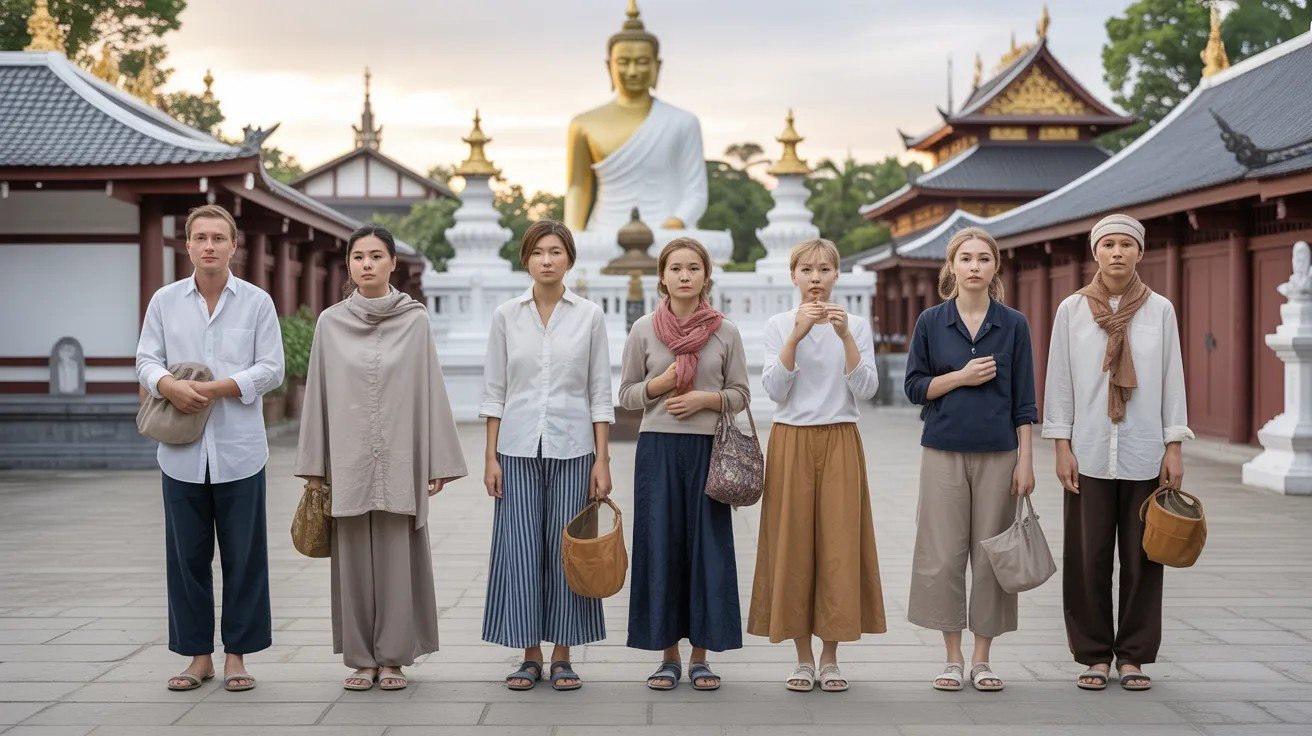
Temples require covered shoulders and knees, modest colors, and simple clothing. You must remove shoes before entering buildings
Coverage Requirements
The basic rule is simple: cover your shoulders and knees. No exceptions. Your shoulders need full coverage, not just straps. Your knees must be completely hidden, not just barely covered.
Avoid anything tight or see-through. Loose, breathable fabrics work best. You’ll need to remove your shoes before stepping inside any temple building.
Color and Style Recommendations
Stick with muted, respectful colors. White, beige, navy, and earth tones are safe choices. Avoid bright neon colors or loud patterns. Black is generally acceptable.
Your clothes should be clean and in good condition. Keep your style simple. This isn’t the time for fashion statements or flashy accessories.
What Women Should Wear to a Buddhist Temple

Women should choose long-sleeved tops and pants or skirts that cover the knees for appropriate temple attire.
Appropriate Tops
Long-sleeved shirts are your best option. They provide full coverage and work in most climates. Modest blouses with sleeves work perfectly. Regular T-shirts are fine if they have sleeves and don’t cling to your body.
I usually pack a lightweight linen shirt when visiting temples. It breathes well in the heat and meets all the requirements.
Appropriate Bottoms
Long pants are the easiest choice. Regular jeans work fine as long as they’re not ripped. Loose cotton pants keep you cool in hot weather. Long skirts that reach below your knees are always acceptable.
Maxi skirts work great because there’s no question about length. Thai fisherman pants are popular because they’re comfortable, breathable, and definitely long enough.
What Women Should Not Wear

Skip sleeveless tops, low-cut shirts, shorts above the knee, and tight leggings when visiting Buddhist temples.
Prohibited Tops
Leave your tank tops and sleeveless shirts at the hotel. Strapless tops are absolutely not allowed. Low-cut shirts that show cleavage will get you turned away.
Sheer or see-through fabrics don’t work even if you’re wearing something underneath.
Inappropriate Bottoms
Short skirts won’t make it past the entrance. The general rule is nothing above the knee, but I recommend going several inches below to be safe. Shorts are typically not allowed, regardless of length.
Tight leggings that show your body shape are considered inappropriate. Yoga pants fall into this category too. Torn or distressed clothing with rips and holes doesn’t meet temple standards.
Dress Code Differences Between Temple Types
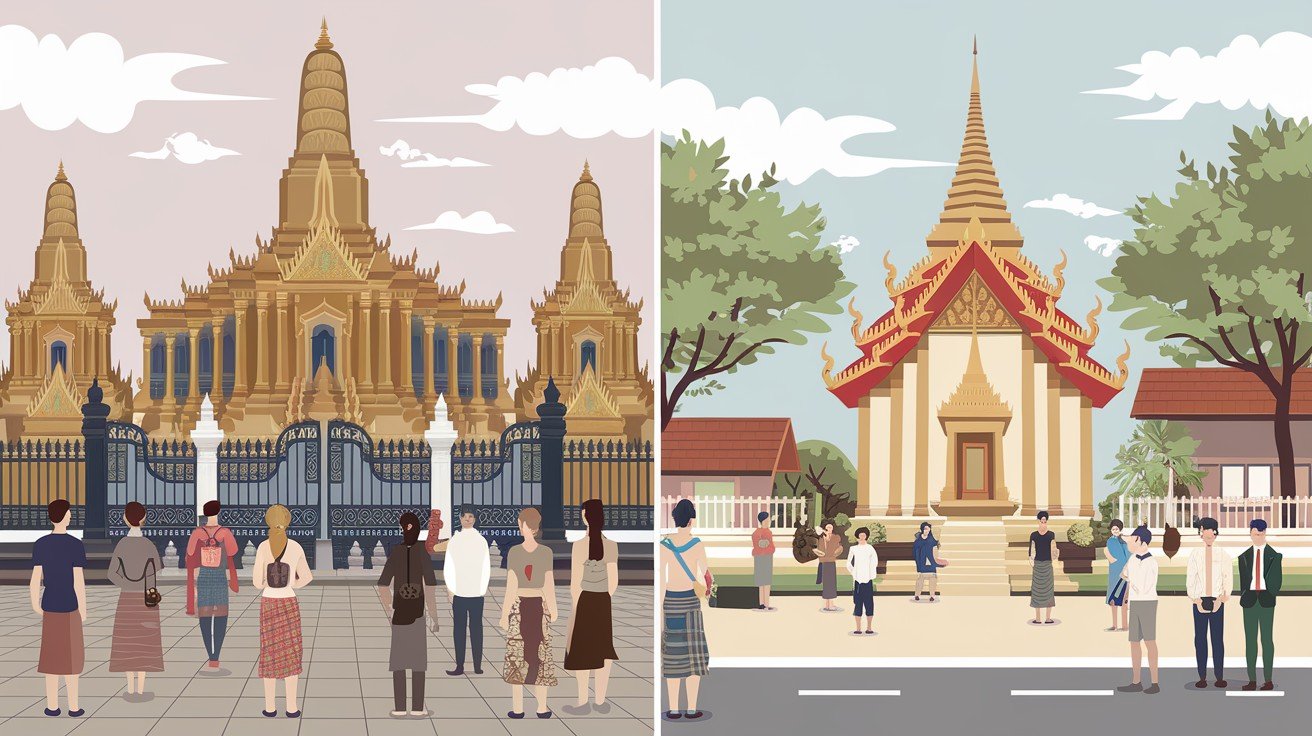
Major tourist temples enforce strict dress codes while smaller local temples may have more relaxed standards.
Strict Temples (e.g., Grand Palace, Wat Phra Kaew)
Famous temples in major cities have the toughest rules. The Grand Palace in Bangkok checks every single visitor. Guards stand at entrances with loaner clothes for people who don’t meet standards.
You might need to rent a sarong or cover-up shirt, usually for a small fee. These temples see thousands of tourists daily, so they can’t be flexible.
General Temples (More Relaxed Rules)
Smaller temples in residential areas are usually more lenient. They still expect modesty, but enforcement is gentler. Local temples might not have guards checking clothing at all. Rural temples tend to be even more relaxed, though you should still cover shoulders and knees.
Just because nobody stops you doesn’t mean anything goes. Use good judgment and dress modestly anyway.
Practical Tips for Temple Visits
Temple visits in tropical countries can be brutal in the heat. Here are some quick tips:
- Choose lightweight, breathable fabrics like cotton or linen
- Wear light colors to reflect sunlight and stay cooler
- Pack a small hand fan and stay hydrated
- Plan visits for early morning or late afternoon when it’s cooler
- Wear slip-on shoes or sandals for easy removal
- Bring socks to protect your feet from hot floors
- Keep a lightweight scarf in your bag to cover shoulders or knees if needed
- Use a hat or umbrella for sun protection outside
- Bring a small backpack for storing shoes and layers
What to Do If You’re Not Dressed Properly
Many temples rent cover-up clothing at entrances. Plan ahead by packing appropriate clothes before your visit.
On-site Solutions
Don’t panic if you arrive underdressed. Many major temples rent sarongs, shawls, and cover-up pants right at the entrance. Rental prices are usually reasonable, often just a dollar or two. Some temples even loan clothing for free with a small deposit.
Shops near popular temples sell inexpensive pants and shirts that meet dress codes. Look for vendors with racks of loose cotton pants and long skirts.
Planning Ahead
The best solution is preparing before you leave your hotel. Pack temple-appropriate clothes in your day bag even if you’re not sure you’ll visit one. You never know when you’ll stumble upon an interesting temple worth seeing.
Check online for specific dress codes at major temples you plan to visit. When booking tours, ask your guide about clothing expectations. If you’re traveling in Asia for more than a few days, buy local clothing early in your trip.
Cultural Etiquette Beyond Clothing
Women cannot touch monks directly. Inside temples, speak quietly, remove hats, and avoid pointing feet at Buddha images.
Interacting with Monks
Women should never touch monks or hand objects directly to them. If you need to give something to a monk, place it on a cloth or nearby surface for him to pick up.
This isn’t about disrespect. It’s part of monastic rules that monks follow. Don’t interrupt monks during meditation or prayer.
Behavior Inside the Temple
Keep your voice down inside temple buildings. These are quiet spaces for reflection and prayer. Remove hats, sunglasses, and headphones when you enter. Point your feet away from Buddha statues when sitting.
In Buddhist culture, feet are considered the lowest and least clean part of the body. Never touch or climb on Buddha images. Take photos only where permitted. When in doubt, ask or follow what other visitors are doing.
Conclusion
Now you know what to wear to a Buddhist temple without stress. Cover your shoulders and knees, pick modest colors, and you’re set. I learned this the hard way at a temple in Thailand, so now I always pack a lightweight scarf and loose pants in my bag.
These simple choices show respect and make your visit more meaningful. You’ll feel comfortable and can focus on the experience instead of your outfit.
Have questions about temple visits or want to share your own story? Drop a comment below!
Frequently Asked Questions
Can I wear sandals to a Buddhist temple?
Yes, sandals work perfectly for temple visits since you’ll remove them before entering buildings anyway. Just make sure they’re comfortable enough for walking around temple grounds.
Are jeans acceptable at Buddhist temples?
Regular jeans are fine as long as they’re not ripped or torn. Make sure they’re paired with an appropriate top that covers your shoulders.
Do men need to cover their legs at temples?
Yes, men should also wear long pants that cover their knees. While enforcement is sometimes less strict for men, shorts are generally not acceptable.
Can I wear black to a Buddhist temple?
Black clothing is acceptable at most Buddhist temples. Some temples prefer lighter colors, but black isn’t considered disrespectful.
What if I’m on my period when visiting a temple?
You can visit Buddhist temples during your period. This is not restricted in Buddhism like it is in some other religions. Just dress appropriately and follow the same rules as any other day.
